Buying guide for sign makers
3D Printers for Sign Making
The best 3D printers for channel letters, illuminated signage, signs and custom parts – our honest recommendations from real-world practice.
In sign making, 3D printing has evolved from an experiment into a serious production technology. But not every 3D printer is suitable for producing professional channel letters, illuminated letters or signs. Anyone who wants to manufacture weatherproof parts in consistent quality over the long term needs more than a cheap entry-level printer.
Why not every printer is suitable
Open printers without a temperature-controlled chamber quickly reach their limits with technical materials. Letters warp, layers crack, and dimensional accuracy suffers. For professional use, what matters most is an enclosed build chamber, high temperature reserves, large print areas and above all reliability in continuous operation.
Benefits of enclosed build chambers
An enclosed chamber keeps the heat constant inside the print area. This prevents warping with temperature-sensitive filaments, improves layer adhesion and ensures dimensionally accurate, stable letters. Especially with ASA and ASA-GF, an enclosed machine is practically mandatory.
The right materials
Which material is right depends mainly on whether the letters are used outdoors or indoors.
For outdoor use (UV- and weather-resistant):
For indoor use (no weather exposure, easier to print):
ASA is the first choice for outdoor use, as it withstands UV radiation and weather permanently. ASA-GF adds significantly higher stiffness but requires a hardened nozzle due to the abrasive glass fibers. PLA is the most straightforward solution indoors – very easy to print and with the finest detail, but not UV- or weather-resistant. PETG sits in between: robust, versatile and suitable for both indoors and outdoors.
Print quality, large areas & series production
Also decisive are clean print quality for smooth, illuminable surfaces, large print areas for letters in one piece, and series-production capability for economical work. High print speed, automatic material change and continuous-operation stability ultimately turn individual machines into a real production line.
Transparency notice: This page contains recommendations and, in part, affiliate links. If you buy through such a link, we may receive a small commission – the price does not change for you. If you'd like to support us a little this way, we'd be very grateful – thank you! All recommendations are based on our assessment for use in sign making. Information on prices and specifications is without guarantee.
Our recommendations
The best 3D printers at a glance
From value-packed all-rounders to large-format industrial machines – for every need in sign making.
Direct comparison
Comparison table
All recommended printers at a glance.
| Printer | Price | Build volume | ASA-GF | Sign making | Beginners | Series production |
|---|
Our recommendation
Bambu Lab P1S – the top pick for sign makers
For most sign makers, we currently recommend the Bambu Lab P1S. It impresses with excellent print quality, high speed, ease of use and an outstanding price-performance ratio. Combined with 3D Letter Studio, professional channel letters can be produced in no time.
This is our clear value-for-money tip – and from around 5 units it becomes a genuinely practical production line.
Try 3D Letter Studio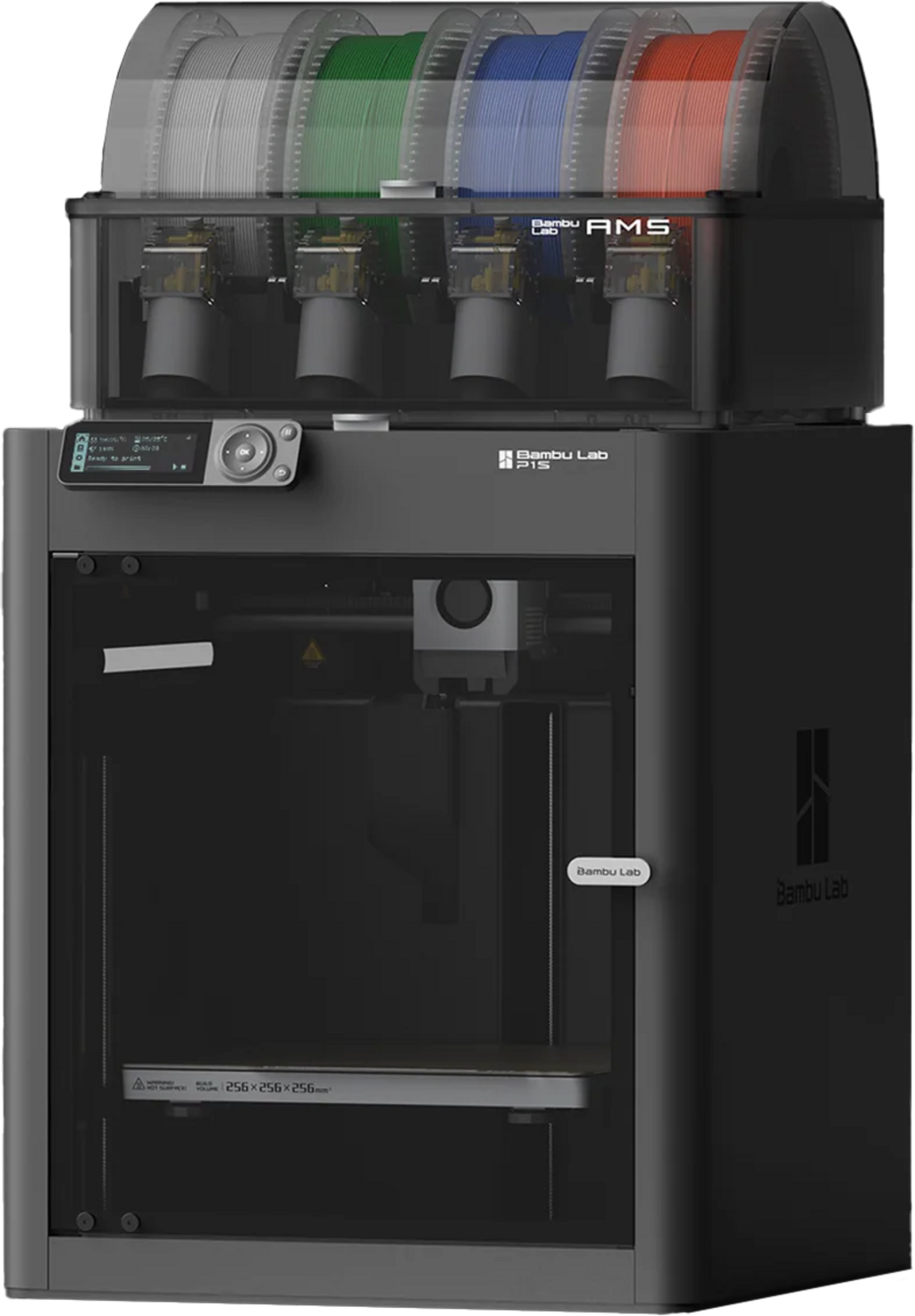
Frequently asked questions
FAQ on 3D printers in sign making
Which 3D printer is best for channel letters?
Why is an enclosed build chamber important in sign making?
Which material is best for outdoor signage?
What does ASA-GF mean and do I need a hardened nozzle?
How large can letters be for 3D printing?
Is 3D printing suitable for series production of letters?
What print temperature do I need for ASA?
Is an expensive large-format printer worth it for sign making?
Do I need CAD skills for 3D-printed letters?
Which printers does 3D Letter Studio work with?
Are the prices listed here binding?
The right software for your 3D printer
With 3D Letter Studio, you create professional channel letters in just a few minutes and export ready-to-print files for nearly any FDM 3D printer.
